Showing posts with label Gordon Brown. Show all posts

Tuesday, 26 July 2011

Dunblane Syndrome Strikes Again

So, The News of the World is gone. Yet if you think the high-pitched outrage that has been yelled at you over the last week is over, think again. Not only can we be sure of a constant drip of stories over the coming months, there is also too much political capital at stake for this to just be about getting The News of the World shut down.

For by breaching every code (written and unwritten) of decency, The News of the World have created the kind of public outrage that can be very dangerous if political opportunists are allowed to get their hands upon it – and this is exactly what is happening now. It is reminiscent of a phenomenon that can correctly be termed “Dunblane Syndrome.”

The Dunblane massacre in 1996 triggered spontaneous outrage and grief from the British public. The public mood in the months after the tragedy was emotionally sensitive to say the least, drifting between grief, anger and the desire that “something must be done” to prevent another massacre of innocent schoolchildren.

It was this emotionally taut mood that Tony Blair (at that point Leader of the Opposition) used to push forward his drastic anti-gun legislation. In his 1996 speech to the Labour Party conference, he famously responded to Tory criticisms that he was guilty of emotional blackmail with this sickeningly cheap shot,

“Well, if they had been in that gym, if they had talked to those parents, sitting on the tiny chairs where once their children sat, they would have been emotional too.”

The implication was clear; if you opposed Blair’s gun legislation (which would have done little to prevent Dunblane) then you didn’t care about dead children, or were too ignorant to understand – after all, you hadn’t seen the tiny chairs! The fact that Blair’s visit to Dunblane was a bipartisan visit with the Tories, and therefore they had talked to the parents and seen the tiny chairs, wasn’t allowed to get in the way of Blair’s “passionate” speech.

Say what you like about Blair, the fact is he knew how to get things done, and this was no different. The Tories didn’t want to be seen as people who didn’t care about dead children, and so shut up, and in 1997 the legislation was passed. Fourteen years later and the fact that gun crime has almost doubled, and that we have the highest burglary rates in Europe is still irrelevant – anyone who tries to revoke or change any of those laws will be tarred with not caring about Dunblane. Poor legislation described by the Home Affairs Select Committee at that time as “panic legislation” and that would never have been passed under normal circumstances was allowed through as wily, agenda-driven politicians tapped into an emotionally sensitive atmosphere.

Fast forward fourteen years and we have The News of the World scandal; a scandal that appears to be constantly evolving. It seems that the outcry from this will not be a short thing, but will be long lasting as more and more sordid details are drip fed to the public over the next few months. This opens the door for left-wing politicians and journalists with a grudge against Murdoch (“How dare he be successful and mildly right-wing!”) to steer this outrage to implement far reaching restrictions on press freedom that have nothing to do with the News of the World scandal.

The activities The News of the World engaged in are illegal, and therefore they should be investigated and prosecuted by the police. If there are questions of police corruption (as there were in the 2006 investigation) then it is that is a separate matter and should be looked at. As David Cameron correctly stated (over the hoots and jeers of the hyenas that pass for Labour MPs), now is the time for the rule of law to work and to take its course.

But that isn’t enough for the politicians and journalists looking to use this for their own political purposes. We are hearing the constant refrain that “there must be regulation.” Ignoring the fact that there are already press regulations, one should always be cautious when one hears cries for “regulation.” For “regulation” in and of itself is neither a good nor a bad thing; it is a question of what kind of regulations we are looking at, what specific regulations will be implemented, and what problems will it seek to solve that are the important questions.

Yet in this whipped up emotional frenzy, we will not see any of those questions asked nor answered. Instead, those with a long standing grudge against a successful media empire will call for the law to be bypassed with whatever haphazard, half-arsed, over the top legislation some slapdash committee of MP’s with no clue about journalism have come up with. Then, it will be forced through Parliament, with anyone who objects to it being put down as “not caring” about Milly Dowler, the Soham girls, Gordon Brown’s son and the 7/7 victims.

The big victim of all this will be press freedom – the most fragile of all freedoms, and the first to fall on the long road to tyranny. Dunblane Syndrome strikes again.

Tuesday, 1 February 2011

Gordon Brown's Betrayal of America

The latest revelations by Wikileaks that the British government not only sought the "compassionate release" of the Lockerbie bomber, but also advised Libya on how best to secure that release, is devastating news for the Anglo-American relationship, as well as Britain as a whole.

This revelation shows even more just how morally bankrupt the Labour government was by the time it was approaching its end.  Most normal people, whether American or British, were disgusted at the fact that a known terrorist who had murdered hundreds of innocent people in the worst terror attack on British soil could be even considered for release on "compassionate grounds".

Yet to watch the man not only be released, but then to be greeted by a hero's welcome and much celebration at his arrival back in Libya should have made anyone feel physically sick.  It was clear then that the Labour government had capitulated on both its principles, and its American allies for the sake of some short term goal.  This can only be fully explained by looking at the anti-Americanism that pervades the British left.  One cannot possibly imagine a Labour government daring to offend our European colleagues in such a way!  Can you imagine Labour ever going against anything the European Union tells us to do?  Yet, because it is the Americans - who the left believe to be evil, and responsible for all the suffering in the world - the "compassionate release" was not so hard for Labour to contemplate.

Therefore it is beyond scandalous to discover today that the government was advising Libya on how to go about it from within a week of Megrahi's diagnosis of terminal cancer.  It shows not only a rejection of any principle of justice, morality, or true compassion from Brown's government, as well as an ambivalence to the families of those killed, but also it is a slap in the face of our American allies who lost significantly more of their citizen's in the terrorist attack than we Brits did.

As I have written many times before, the Anglo-American relationship is under severe strain, with an extremely anti-British President in office, and so this revelation could destroy the special relationship.  Hopefully, David Cameron can apologise on behalf of the former government, explain that the new government opposed the policy of "compassionate release" at the time, and does so today.  Maybe this can limit the fallout from this disgraceful revelation.

However, I fear that the chill in Anglo-American relations is about to turn into a deep freeze.  That is, unless we can get someone like Sarah Palin into the White House.

Thursday, 29 July 2010

International Relations and "hurtful" remarks


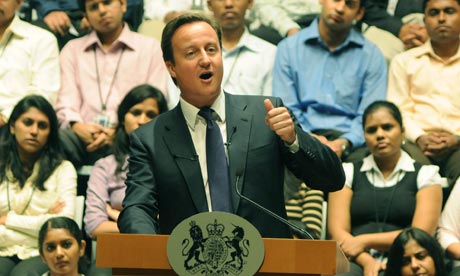
David Cameron is currently on the next stage of  his international tourm and has ruffled some feathers with his views on various issues.  I don't agree with everything Cameron has said (describing Gaza as a prison camp was a little bit.....incorrect for my tastes!) but I do appreciate a leader being honest with what he believes.  Brown never seemed to have an opinion on anything, so it is nice to hear actual opinions and policies from the Prime Minister.

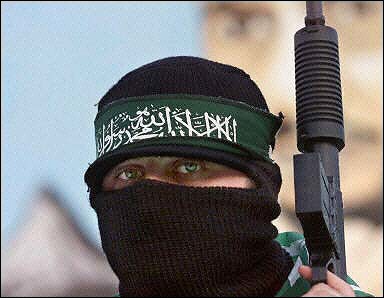
Arguably his most controversial comments were when he stated that it was unacceptable for Pakistan to allow terrorist training camps to flourish within Pakistan, therefore promoting terrorism throughout the world.  Now, as far as I am concerned, these comments are either right or wrong.  Pakistan is either allowing terrorist training camps to flourish within its borders, and as a result should clamp down on it - or it is not allowing them to flourish, and therefore should refute Mr Cameron's remarks.  The statement is either a truthful one, and must therefore be accepted, or it is false and must be refuted.

Yet, this question is not the one being asked, or answered at all in the resulting discussion about the comments.  The discussion is less on whether or not the comments were right, but whether or not they were 'hurtful' or 'offensive'.  Take Pakistan's High Commissioner who said that people in Pakistan were "really hurt" by Cameron's comments and called for him to 'make amends'.

Now, whether or not the remarks are 'hurtful' are irrelevant - the question should be whether or not they are true.  Only on something small, like whether or not you enjoyed a meal, does one sacrifice truth for someone's feelings.  But on an issue as large as international terrorism, feelings are irrelevant, the question is only one of truth.  If Pakistan are indeed allowing terrorism to flourish, as appears to be the case, then Cameron is well within his rights and responsibilities to say so in strong terms to the Pakistani goevernment.  It would be irresponsible not to.

The High Commissioner should be saying either "Yes we need to do more" or "No, Mr Cameron's comments are innacurate, we are doing enough etec."  But to say they are hurtful really misses the point, but it touches on a side of politics that has tainted a lot of political debate.  It is really a left-wing influence that has tainted the mainstream of thought and discussion.

The influence is one of an essentially relativistic brand.  For many on the left, a thing does not have an intrinsic, objective moral value - it is entirely subjective.  Therefore, many issues come down to either intentions or feelings, not right or wrong.  So often on political issues, you hear about 'compassion' 'hurtfulness', 'understanding' etc instead of getting things done, and whether measure are right or wrong, working or failing, true or false.  This is because it is the land of the subjective intention that the left work in.

From this understanding of truth, Cameron hurt people's feelings - therefore he shouldn't have said what he said.  However, for those of us in America and Britain who want to stop terrorist attacks, the real question is "Was David Cameron right?" - the answer is not yet conclusive, but it is that question that is the judge of the rightness of his comments, not whether or not it offended or 'hurt' people.

As a result, if David Cameron does believe that Pakistan is not doing enough in its responsibilities, then it is his duty to say so in the strongest terms - and he should be commended, not criticised, for doing so.

Wednesday, 21 July 2010

Cameron shines!

Yesterday was a day to hold one's breath if you care about Anglo-American relations.  David Cameron went into the lion's den, not only having to face the most anti-British President in American history, but also having a whole bunch of Senators, such as the infamous Senator Schumer D-NY, baying for blood.

Cameron however, was excellent.  The main issue of the day seemed to be the release of the Lockerbie bomber, which Obama seems to have turned hardline on (despite continually sucking up to Libya himself and being informed of the situation throughout.)  Cameron had to form a balance.  He was one of the fiercest critics of the release of the bomber, and there was no reason why he should have to go and defend the indefensible.  However, he also had to make sure it didn't become an Obama-esque apology tour, where he grovelled before the President and the Senators asking for forgiveness.

Cameron hit the note perfectly.  I'm not always Cameron's biggest fan, but yesterday was a day in which he really shined.  He was clear in his condemnation of the decision, stating

"I don't need an inquiry to tell me what was a bad decision. It was a bad decision,"
On the same token, he would not be pushed into a grovelling apology by the President, or his loony bunch of anti-BP Senators, by making it quite clear that it was the Scottish Government that made the decision, and  that it was right for that decision to be made by them.  


This is important. There was definitely an attempt to make decisions for Britain by the authoritarian Dems, and Cameron pushed them back.  "I wish they had made a different decision, but it was still their decision to make, so back off" was the obvious message from Cameron - and it was the right message to send.

Cameron was at his best at the press conference.  Obama blathered on for ages and ages, looking stern-faced and tired as well as being very boring.  Cameron, on the other hand, lent casually against the podium while still looking like a statesman, continually called Obama "Barack" (I bet that didn't go down well!), and joked about how drinking some beer he had been given by the Americans was so good, he even cheered for the Germans in the World Cup!  With one of his trademark smiles, the gathered media was laughing away with him, while Obama stood there wishing he had Gordon Brown stood next to him instead of this cheeky new upstart!

This tour could be a massive PR coup for us Brits.  Obama is trying to stir-up an anti-British attitude, but Cameron is cutting through it like a knife through butter.  If he can get himself onto the mainstream news networks for an interview or two, it will repair a great deal of damage that has been done by the Obama administration.